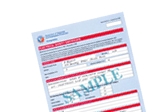
For all work done by an electrician in Australia, you should obtain an electrical compliance certificate. Find out what a compliance certificate is, how it works and why you need one.

When electrical contractors do any work in your home (be it installation, disconnection, reconnection or alteration), you should insist on being given a compliance certificate for any work carried out. These are known under various names – ‘Certificate of Electrical Safety’, ‘Electrical Safety Certificate’ and so forth.
It’s a legal requirement that contractors provide you with a certificate of electrical safety for any regulated electrical work that’s been carried out.
The purpose of this safety certificate is to show that the work has been done by a licensed electrical contractor, and that the work done has been tested to ensure that it’s effective, and that it complies with the relevant wiring regulations (AS/NSZ3000:2007)
Each compliance certificate should carry a unique identifying number, and should be produced in triplicate – one copy for yourself, another for your electricity provider, and a third to the responsible government authority in your state or territory.
Testing the installation
There are three types of test that are important as far as certification goes:
Electrical insulation – This test is done with an insulation tester. It proves that there are no paths to earth, and that the insulation is of an adequate standard.
Earth continuity tests – This test will ensure that the safety switch (RCD) will protect your life, and those of others in your home.
Polarisation test – This test ensures that all power points are installed correctly – and safely wired with switches in the active wires.
Are all installations tested?
No, they’re not! Unfortunately familiarity breeds contempt – so goes the saying, so tests are often not carried out as they should be. Ask for the tests to be done – in particular on new installations or significant extensions of the house wiring.